
Table of Contents
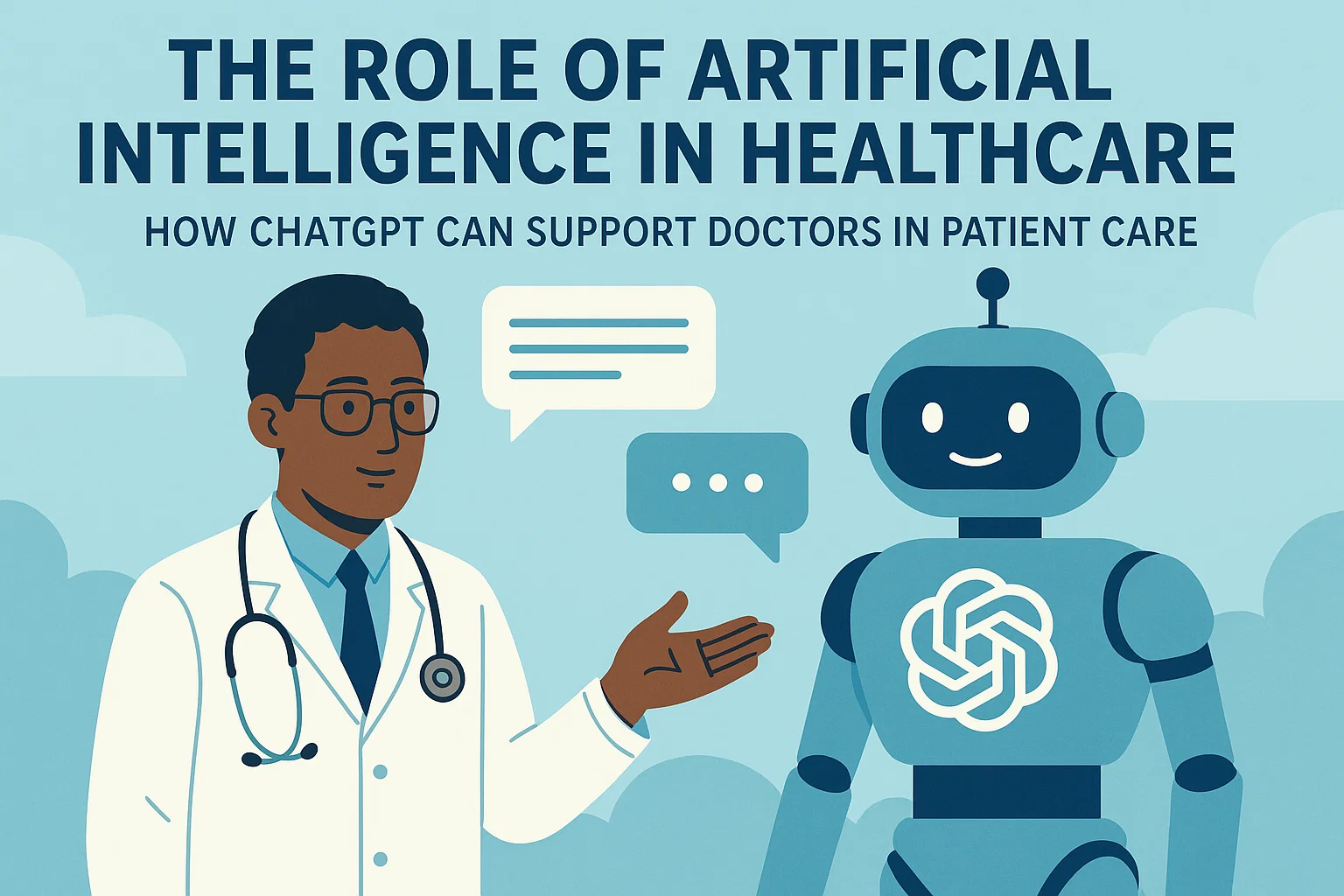
Artificial Intelligence (AI) has rapidly evolved from a futuristic concept to a practical tool across sectors, including healthcare. Doctors now stand at the threshold of a new era, in which technologies such as ChatGPT offer significant support for patient care. This transition is heralding improvements in diagnosis, treatment options, and patient engagement, transforming the way healthcare professionals work. With each advancement, AI promises to deliver not only better outcomes for patients but also new efficiencies for medical practitioners. Below, we examine the intersection of AI and healthcare, assessing how tools such as ChatGPT for doctors are changing the landscape.
The Role of Artificial Intelligence in Diagnostic Accuracy and Efficiency
The diagnosis is a critical step in patient care, and AI’s role in enhancing diagnostic accuracy and efficiency cannot be overstated. AI algorithms can process vast amounts of medical data, including radiological images and genetic information, more quickly than human professionals. This speed in analysis can lead to earlier detection of diseases such as cancer, potentially saving lives.
Moreover, AI tools help reduce human error by serving as a second check for healthcare professionals. When used in conjunction with a doctor’s expertise, AI can help identify patterns and anomalies that might be missed by the human eye. The emergence of AI in diagnostics creates an opportunity for a more collaborative approach to patient care, one that blends the best of technology and human touch.
Finally, AI-driven diagnostic tools can also enable personalized medicine. By analyzing a patient’s unique health data, AI can suggest customized treatment plans that may yield better outcomes. This level of personalized attention was once a labor-intensive process for doctors, but is now increasingly more manageable thanks to artificial intelligence.
Enhancing Patient Engagement and Monitoring with ChatGPT
Patient engagement is another area where AI, particularly ChatGPT, is making strides. By providing a conversational interface, ChatGPT can interact directly with patients, offering medical information, medication reminders, and comfort during times of distress. This interaction can significantly enhance the patient experience by making healthcare more accessible and less intimidating.
AI chatbots can also be instrumental in patient monitoring, especially in chronic disease management, where consistent follow-up is crucial. Through mobile apps integrated with AI, patients can report symptoms, receive advice, or be alerted to seek medical attention. This real-time monitoring can lead to more timely interventions and better management of health conditions, ultimately improving outcomes.
In addition, ChatGPT can handle routine inquiries, freeing up medical staff to focus on more complex patient needs. Patients benefit from quick responses to their questions, while healthcare providers can prioritize direct patient care, research, and other critical tasks. This efficient redistribution of workload enhances overall healthcare delivery. Don’t miss our recent post about Alibaba Launches Quark AI Glasses in China, Joining the Global Wearables Race.
ChatGPT as an Aid in Medical Research and Data Analysis
Medical research is another field where AI, including ChatGPT, can play a pivotal role. The ability to rapidly analyze complex datasets can accelerate medical research, leading to faster discoveries and innovation. AI’s deep learning capabilities can identify correlations and patterns in data that may not be immediately apparent to human researchers, thereby opening avenues for new hypotheses and treatment options.
In data analysis, AI excels at handling the sheer volume of data generated by modern medical research, such as genomic sequences and clinical trial data. By analyzing this information, AI can help identify potential drug targets, predict drug interactions, and anticipate side effects, which is invaluable for drug development and patient safety.
The potential of AI in medical research extends to data sharing and collaboration. By structuring and analyzing data in universally understandable formats, AI promotes more accessible data sharing among researchers, facilitating global collaboration, which is essential for addressing worldwide health challenges.
Artificial intelligence, exemplified by technologies like ChatGPT, holds transformative potential for the healthcare industry. By enhancing diagnostic capabilities, improving patient care, and streamlining research, AI supports doctors in delivering superior healthcare services. As we navigate these innovations, it is vital to manage ethical considerations and ensure that AI complements the irreplaceable human elements of medicine. The intersection of technology and healthcare promises a future where AI tools like ChatGPT become integral partners in the ever-important mission of saving lives and promoting health.